What is IVF?
In vitro fertilisation (IVF) is a fertility treatment where eggs are collected from the ovaries and fertilised with sperm in a laboratory. An embryo can then be transferred into the uterus, with the aim of achieving a pregnancy.
IVF is one possible fertility treatment. Whether it is appropriate depends on your individual circumstances, test results, medical history and treatment goals.
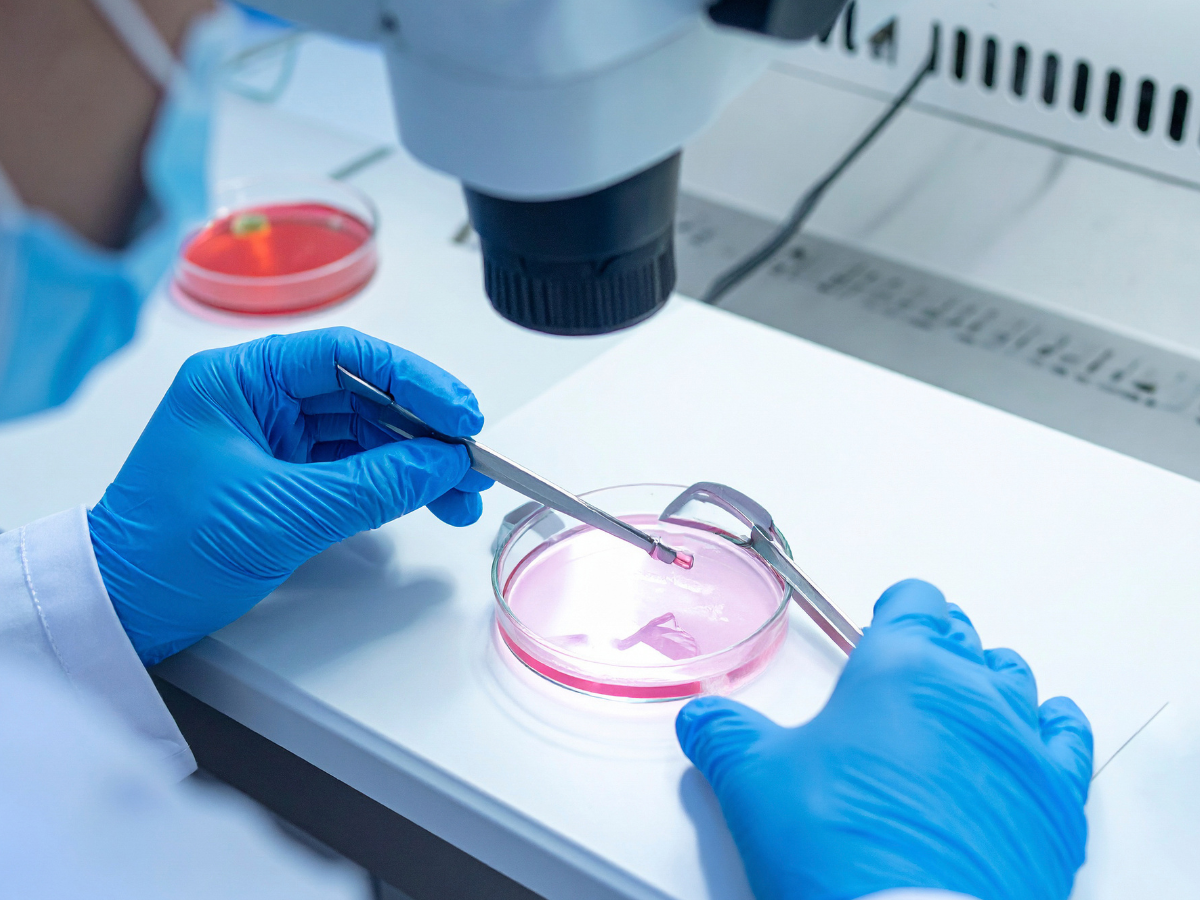
There are different reasons someone may be advised to consider IVF
For some people, IVF may be recommended because testing has identified a particular fertility factor. For others, it may be considered after trying for some time or after other approaches have not resulted in a pregnancy.

Fallopian tube factors
Blocked or damaged fallopian tubes can make it difficult for the egg and sperm to meet naturally.

Ovulation or ovarian factors
Some conditions can affect ovulation, while ovarian reserve and age may also influence treatment decisions.

Sperm factors
Sperm count, motility, morphology or other male fertility factors may affect the chance of fertilisation.

Endometriosis
Endometriosis can affect fertility in different ways, although not everyone with endometriosis will need IVF.

Age-related considerations
Female age is an important factor in fertility and may influence how quickly treatment is considered.

No clear explanation
Sometimes fertility testing does not identify one clear reason for difficulty getting pregnant. IVF may still be one option discussed.
How does IVF work?
Every treatment plan is individual, but an IVF cycle generally follows these stages.
stimulation
retrieval
preparation
development
transfer
test
This is an overview rather than a treatment schedule. For a more detailed look at what happens before, during and after an IVF cycle, see our Patient Guide.
IVF is not the same for everyone
The basic stages may be similar, but the details can differ considerably from one person to another.
Your stimulation plan
The type and dose of medication, length of stimulation and monitoring required are based on your individual circumstances and how your ovaries respond.
Egg and embryo development
The number of eggs collected, how many fertilise and how embryos develop cannot be known in advance. Not every egg will necessarily fertilise or develop into an embryo suitable for transfer or freezing.
Fresh or frozen embryo transfer?
An embryo transfer does not always take place during the same cycle as egg retrieval. Depending on your treatment plan and circumstances, your doctor may discuss a fresh or frozen embryo transfer.
Fresh embryo transfer
A suitable embryo is transferred during the same treatment cycle as the egg retrieval, if a fresh transfer is appropriate.
Frozen embryo transfer (FET)
A suitable embryo is frozen and transferred in a later cycle. This separates the egg retrieval and embryo transfer stages.
The appropriate approach depends on your individual clinical circumstances and will be discussed with your doctor.
Does IVF guarantee pregnancy?
No. IVF can help overcome or work around some fertility factors, but it cannot guarantee that a pregnancy will occur.

Age matters
Female age is one of the important factors associated with IVF outcomes, particularly because egg number and egg quality change with age.
There is more than one factor
Egg and sperm factors, embryo development, medical history and individual clinical circumstances can all play a part.
Every cycle can be different
Even for the same person, response to stimulation and embryo development may vary between treatment cycles.
When looking at IVF success rates, it is also important to understand what a particular percentage is measuring. Clinical pregnancy, live birth and outcomes per treatment cycle are not the same measure.
What happens to additional embryos?
Where there are additional embryos suitable for freezing, they may be cryopreserved for potential use in a future frozen embryo transfer, subject to your individual circumstances and the advice of your clinical team.
Not every fertilised egg will develop into an embryo suitable for transfer or freezing. Your clinical and laboratory team will explain the development of your embryos and the options available to you.
Is IVF the right next step for us?
Having a fertility consultation does not mean you are committing to IVF. The first step is understanding your circumstances, reviewing any relevant test results and discussing the options that may be appropriate for you.
Depending on what is found, IVF may be one option discussed, but it is not automatically the next step for everyone.
Not sure where to start?
A fertility assessment can help you understand several important fertility factors before deciding what, if anything, you would like to do next.
IVF FAQs
How long does an IVF cycle take?
The timing varies according to the treatment plan. As a general guide, the IVF(SG) patient journey from the beginning of treatment through to the pregnancy test may take around four to six weeks, although a frozen embryo transfer may take place in a later cycle.
Will I definitely have embryos to freeze?
No. The number of eggs collected, fertilisation and embryo development vary between individuals and between cycles. Not every fertilised egg will develop into an embryo suitable for transfer or freezing.
Does having IVF mean I will need more than one cycle?
It is not possible to know in advance how many treatment cycles an individual may need. IVF does not guarantee pregnancy from a single cycle, and your doctor can discuss your circumstances and treatment progress with you.
Do I need a referral to see IVF(SG)?
No. You can contact IVF(SG) directly to arrange a consultation.
Do I have to decide on IVF before my first consultation?
No. A consultation is an opportunity to discuss your history, test results and possible next steps. You do not need to commit to IVF simply because you have spoken to a fertility specialist.